Is the economy healthy? What signals should we be watching for? What keeps us competitive?
These questions and more helped guide the discussion on Tuesday, November 10, as the Chamber of Commerce Grand Haven, Spring Lake, Ferrysburg partnered with Lakeshore Advantage for the 2026 Industry Trends event.
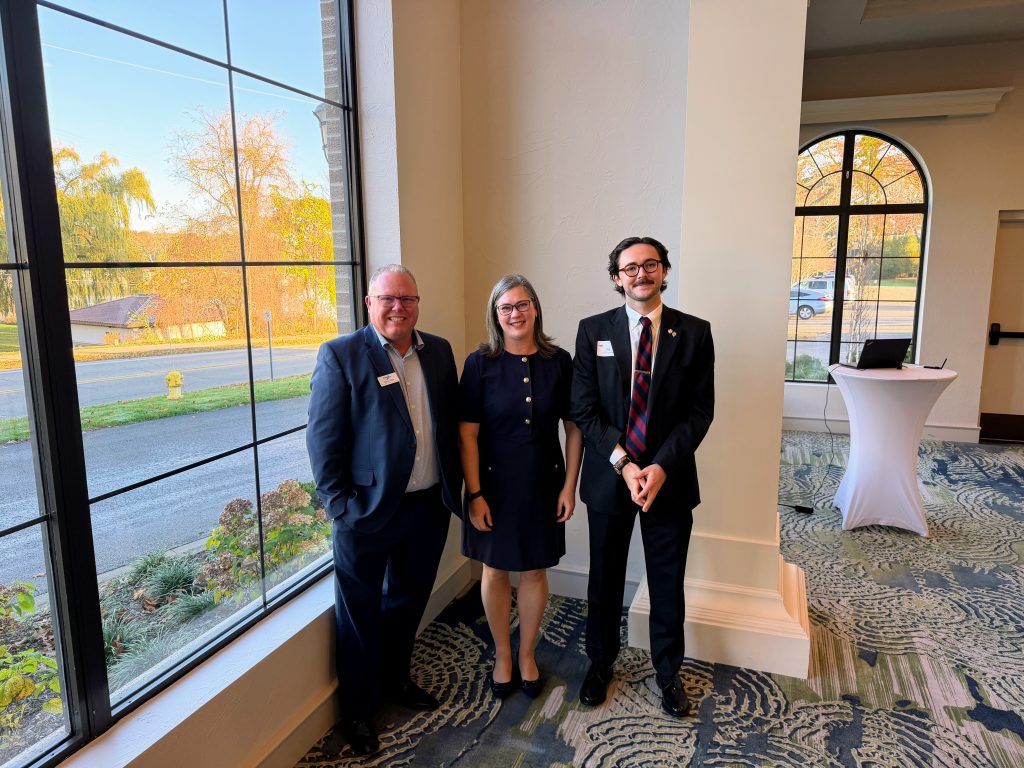
Mark Allen, President & CEO of The Chamber, welcomed Mandy Cooper, Interim President of Lakeshore Advantage to share insights into the economic trends, opportunities, and challenges shaping Ottawa and Allegan County.
“We’ve seen employment growth over the last five years from 2021-2026,” said Cooper. “The average growth in Michigan is 7.3%, the Lakeshore region has seen an 8.9% rate of employment growth, and here in Grand Haven specifically, we’ve experienced an 8.6% employment growth rate.”
Additional indicators point to the region’s economic strength. Ottawa County’s median household income of $90,502 exceeds both Michigan’s ($72,875) and the national median ($80,734). Educational attainment is also higher, with 41.7% of Ottawa County residents holding a bachelor’s degree or higher, compared to 33.3% statewide and 36.9% nationally.
These figures reflect some of the assets that contribute to the region’s economic competitiveness, including a skilled workforce and a strong foundation for continued business growth.
Manufacturing & Industry Diversity
“Manufacturing is our foundation,” said Cooper. “Forty percent of our GRP is generated by manufacturing. It is important to recognize these employers and support them.”
Major employers contribute significantly to the economic vitality of Ottawa County. Beyond providing jobs and competitive wages, they contribute to the local tax base that supports infrastructure and essential services, while many also invest in the community through philanthropic support and partnerships.
While manufacturing remains a cornerstone of the regional economy, the diversity within the industry is another important strength.
“We see industry diversity in the makeup of our primary employers,” said Cooper. “We have automotive manufacturing, furniture and related product manufacturing, food and pharmaceutical manufacturing as well as fabricated metal product and boat manufacturing, automation, advanced energy storage, and plastic injection molding.”
This diversity contributes to economic resilience. When one industry experiences challenges or a slowdown, strength in another can help maintain momentum, reducing the region’s dependence on any single sector.
Housing: A Challenge to Continued Growth
Despite encouraging economic indicators, the region faces challenges that could affect its ability to sustain growth. Among the most pressing is housing availability and affordability.
Chris Marco, Community Development Director at Lakeshore Advantage, shared insight into the growing gap between housing supply and demand.
“The housing supply has not kept up with demand,” said Marco. “In Ottawa County last year, we needed over 16,000 units to provide housing whether that was rental units or For Sale units.”
Marco touched on the affordability gap showing that the home that an average employee can afford is $316,795 but that the average cost to buy a home is $413,000 and the average cost to build a 1,400 sq. ft. home is $350,000.
Housing availability and affordability have implications beyond the housing market. When employees struggle to find attainable housing near their workplaces, businesses may face additional challenges attracting and retaining talent.
Lakeshore Advantage identified several potential solutions, including expanding housing types and lot flexibility through zoning, exploring financing tools such as tax increment financing and local funding, utilizing preapproved building plans and coordinated development, and encouraging employer involvement through advocacy and land contributions.
Addressing these challenges will require continued collaboration among employers, developers, local governments, and community partners.
Business Outlook: Opportunities and Barriers to Growth
According to Lakeshore Advantage’s 2026 Business Insights Report, regional businesses are showing encouraging signs of continued growth. Companies are gaining ground in sales, product lifecycles remain strong, and expansion plans have increased slightly.
The report also found that 25% of Grand Haven area respondents plan to diversify into additional industries, another encouraging indicator of the region’s adaptability and potential for continued growth.
However, businesses continue to identify obstacles that could influence future investment and expansion.
“Respondents reported barriers to growth including workforce availability, market demand & competition, infrastructure capacity, available expansion sites, transportation access, local permitting, and housing affordability,” said Cooper.
Industrial-site readiness is another growing concern in Ottawa County. As existing businesses look to expand and new companies consider investing in the region, the availability of development-ready land is critical. Without suitable sites and the necessary infrastructure in place, businesses may be forced to look elsewhere for opportunities to grow.
The challenge isn’t simply attracting investment to our region, but ensuring we are prepared to accommodate it. Losing an opportunity for business expansion because suitable land isn’t available could mean losing jobs, investment, and future economic growth.
These findings reinforce the importance of looking beyond individual economic indicators to understand the broader conditions that support business success.
Looking Ahead
The 2026 Industry Trends discussion highlighted both the strengths of our regional economy and the challenges that will shape its future.
A strong manufacturing foundation, diverse industries, a skilled workforce, and continued business investment position Ottawa County and the Lakeshore region for long-term success. At the same time, housing affordability, workforce availability, infrastructure, and industrial-site readiness will require intentional planning and collaboration to ensure our region is prepared for future growth.
Maintaining our region’s competitiveness means not only recognizing what makes our economy strong today, but also investing in the people, businesses, and communities that will sustain it tomorrow.
Cooper emphasized that continued communication and collaboration between businesses and regional partners will be essential to addressing these challenges.
“My ask is this: stay engaged, talk to us, talk to the Chamber, tell us what you’re seeing and experiencing,” said Cooper. “If you as a business owner or as a part of a business and you’re dealing with a challenge, make sure to reach out and ask for help. There is a surprising number of resources available that can be brought to the table. We cannot solve every problem today. Some of this takes years to solve, but we’re here to try and help. Together, I really do believe that we can make a difference in support of our local economy.”
Through partnerships like Industry Trends, The Chamber and Lakeshore Advantage continue to bring regional leaders together, share valuable information, and encourage conversations that help move Northwest Ottawa County forward.
Thank you to Mandy Cooper, Chris Marco, and the Lakeshore Advantage team for sharing their expertise, and to everyone who joined us for this important conversation.